

Let's be honest—working from home sounds amazing on paper.
No traffic. Pajamas all day. Your kitchen, your coffee.
But without the right work from home routine, it can get really weird. You're constantly juggling distractions, your "office" is also your bed, and some days you realize… you haven't spoken to another human being in hours.
You're definitely not the only one. Research shows remote workers are twice as likely to feel lonely compared to office folks, and symptoms of anxiety and depression are on the rise—especially for those living alone.
Still, it's not all bad. Studies also show remote workers can be 35-40% more productive and make 40% fewer mistakes — especially when their remote work routine is intentional and consistent.

You're definitely not the only one. Research shows remote workers are twice as likely to feel lonely compared to office folks, and symptoms of anxiety and depression are on the rise—especially for those living alone.
1. Start with a Real Morning Routine (Even If It's Just 10 Minutes)
Remember when you used to commute? That time between sleep and work wasn't just about sitting in traffic. It was actually giving your brain a chance to wake up and shift gears.
When you work from home, that transition disappears.
One minute you're sleeping, the next you're answering emails in bed—still half-asleep and definitely not ready to make decisions.
That’s why having a solid daily routine for work from home is essential to reset your mental gears.
Your brain needs transitions. Without them, you're essentially shocking your system from sleep mode straight into work mode. No wonder you feel foggy until noon!
Here's the thing: you don't need a 5-mile run (though if that's your jam, go for it). Even just 10 minutes of intentional activity can signal to your brain that the day has officially started.
Some simple morning rituals that actually work:
Make your bed (seriously, it creates an immediate sense of accomplishment)
Splash cold water on your face or take a quick shower
Step outside for 5 minutes with your coffee
Write down three things you want to accomplish today
Do a quick stretch
Many remote workers use what they call a "fake commute"—a 10-minute walk around the block before sitting down to work.
What’s your version of a fake commute? It could be as simple as changing out of your sleep clothes into "work from home" clothes—part of a routine for working from home that helps shift your mindset into work mode.
2. Designate a Brain-Approved Workspace
There's a psychological concept called "environmental psychology" that explains why working from your bed is a terrible idea (even though we've all done it).
Your brain makes strong associations between places and activities. When you work where you sleep, your brain gets confused—"Are we relaxing here or focusing?"
The result? You work poorly during the day AND sleep badly at night. Lose-lose.
But what if you live in a tiny apartment or share space with family or roommates? You might not have the luxury of a separate home office, but you can still create what psychologists call "cognitive boundaries."
Try these approaches if space is tight:
Set up a folding desk or table that you only use during work hours
Use a specific tablecloth that you put down only during work hours
Face a different direction than you normally would for non-work activities
Use noise-canceling headphones to create an auditory boundary
Have a "work candle" that you light only during work hours
One clever trick used by people living in studio apartments is a room divider screen that opens only during work hours.
When the workday ends, the screen is closed, effectively hiding the desk area. It’s like putting the workspace in a closet—out of sight, out of mind.
The goal isn't perfection—it's creating enough separation that your brain registers "this is where work happens" versus "this is where I relax."
Even small visual or sensory cues can make a huge difference in how your brain processes the environment.
3. Set a 'Real' Work Schedule (and Actually Stick to It)
When the boundaries between work and home blur, time gets weird.
Days stretch endlessly, or suddenly it's 7 PM and you're still answering emails.
Here's a surprising stat:
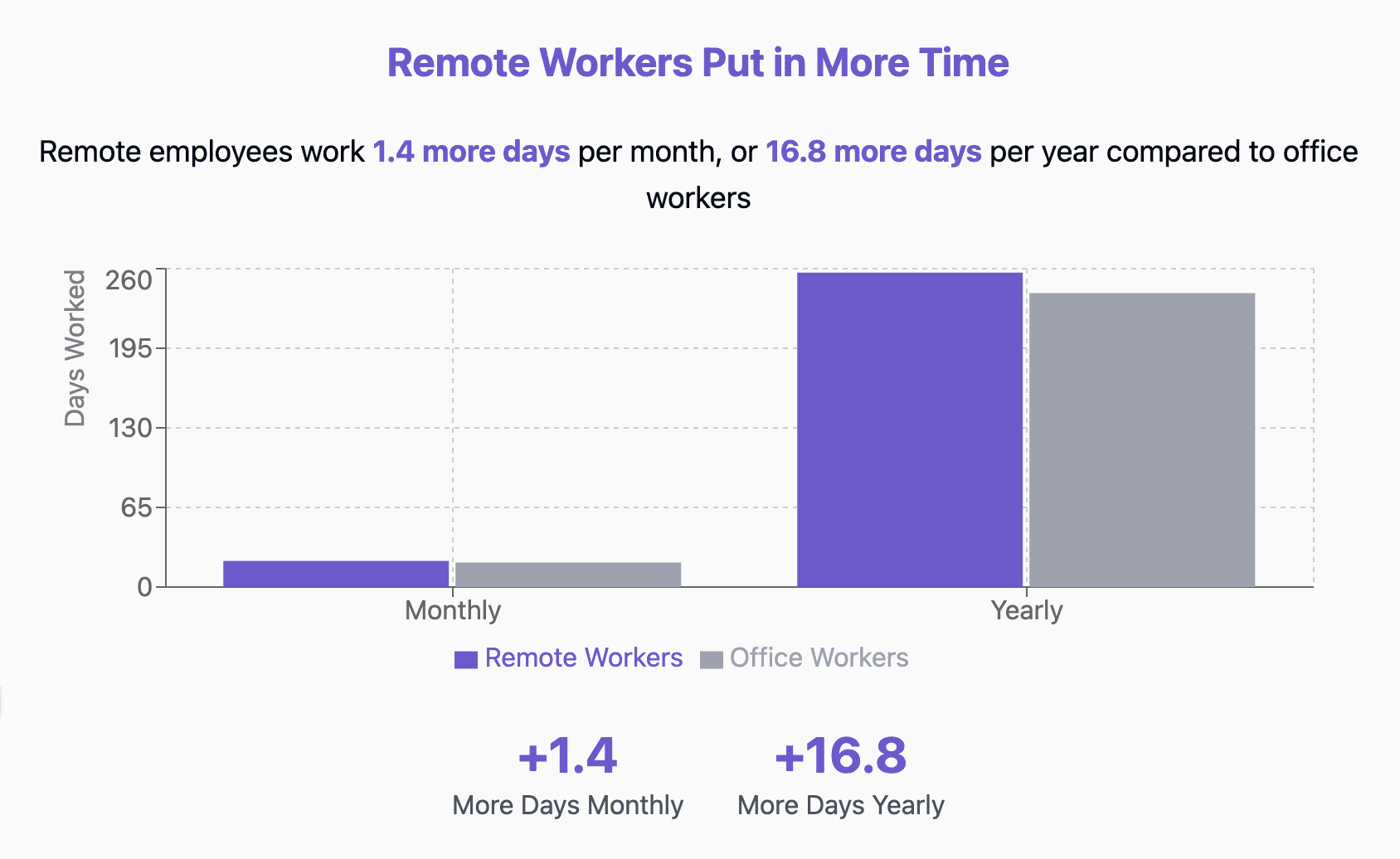
That's right—despite what your former micromanaging boss might have thought, you're probably working MORE from home, not less.
The problem isn't laziness; it's that work expands to fill available time. Without clear boundaries, you're never really "off."
Creating structure isn't about mimicking a rigid 9-to-5. It's about designing rhythms that work with your energy patterns:
What time of day are you naturally most focused? (Morning people, I see you)
When do you typically hit energy slumps? (3 PM crash, anyone?)
What days of the week do you need more meetings versus deep work time?
Once you understand your patterns, try time-blocking your day:
Focus blocks: 60-90 minutes of uninterrupted work on important tasks
Buffer blocks: 30 minutes for emails, messages, and quick administrative tasks
Break blocks: 15-30 minutes to rest your brain and move your body
A popular technique among remote workers is the Pomodoro method: 25 minutes of focused work followed by a 5-minute break.
Just as important as your start time? Your end time.
A strong daily routine work from home includes clear boundaries so you know when to switch off. Set a specific time to shut down your computer every day—and stick to it.
4. Minimize Distractions Without Losing Your Mind
Working from home is basically an obstacle course of distractions. The dishes in the sink. The delivery person at the door. The neighbor's dog who apparently has strong opinions about everything.
And that's before we even talk about digital distractions. The average person checks their phone 96 times a day—that's once every 10 minutes!
While you can't eliminate all distractions, you can minimize their impact with these simple strategies
Put your phone in another room during focus blocks
Wear noise-canceling headphones (even if you're not listening to anything)
Use a visual signal for family members or roommates (like a specific hat or sign) that means "please don't interrupt unless it's urgent"
For household distractions, try the "quick fix" rule: if something will take less than 2 minutes to address (like putting a dish in the dishwasher), do it immediately. If it will take longer, write it down for later.
A technique that's gained popularity among remote teams is the concept of "focus hours." Many remote developers and writers block off two hours each day (typically 10 AM to noon) where they're completely unavailable unless there's an emergency.
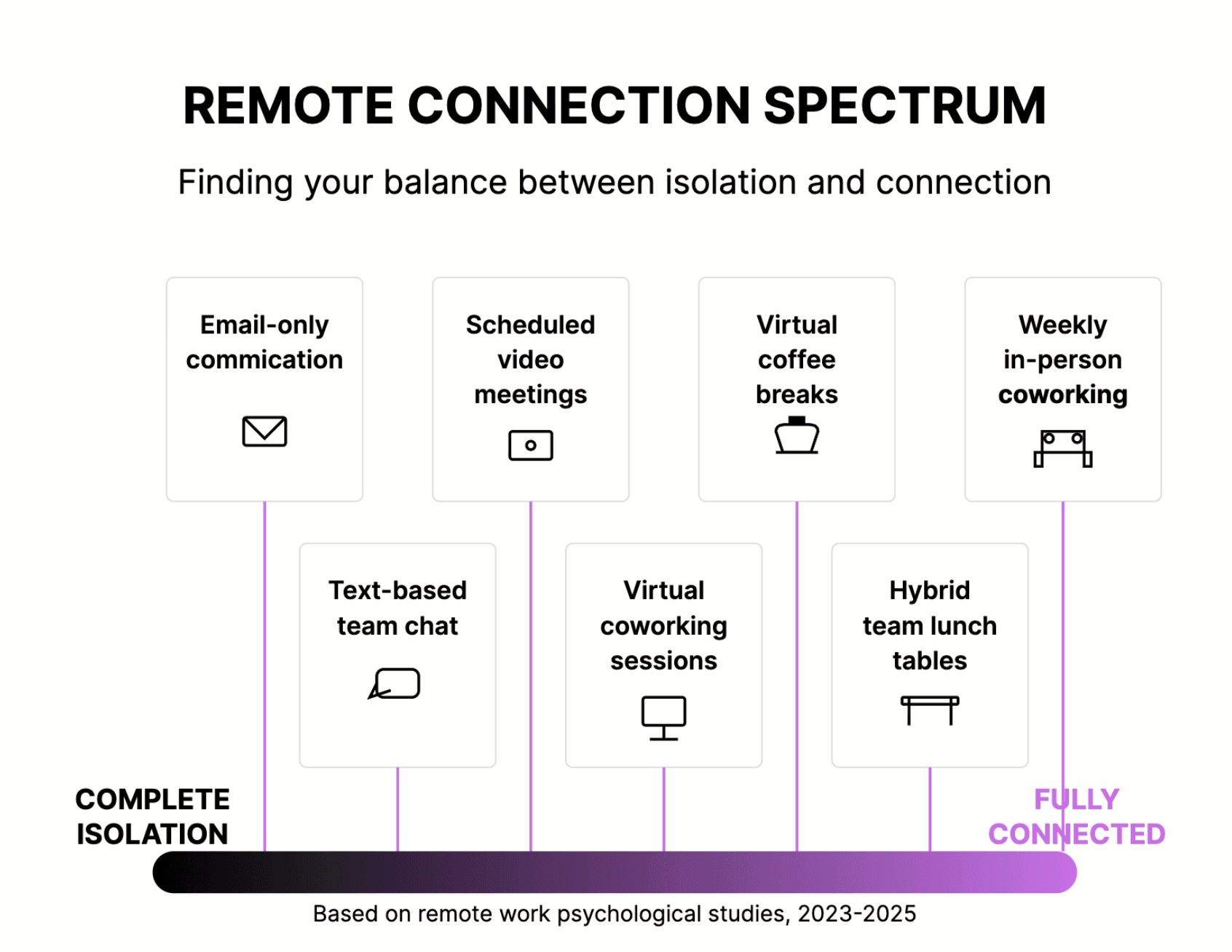
5. Fight Isolation with Intentional Connection
Here's a startling fact: remote workers are twice as likely to feel lonely compared to office workers. When your coworkers are just pixels on a screen, you miss out on the casual conversations and spontaneous interactions that build relationships.
The key word here is intentional. Connection doesn't just happen when you work remotely—you have to create it.
Practical ways to build connection
Schedule virtual coffee breaks with colleagues (15 minutes, no agenda)
Join industry Slack channels or Discord communities
Find a virtual coworking buddy and work "together" on video
Take calls while walking outside (movement + connection = double win)
Join local coworking spaces even just once a week
A popular strategy among remote teams is the "virtual lunch table"—an open video call available during lunch hours where team members can drop in and out freely.
It helps recreate the casual, unstructured conversations that naturally happen in an office setting, allowing space for both work-related discussions and light, social chats.
For those living alone, social connection becomes even more crucial. Studies show that remote workers living alone show higher rates of anxiety and depression.
If that's you, prioritize social activities outside of work hours.
Even brief interactions with neighbors or baristas can help satisfy your brain's need for human connection—and prevent burnout from an otherwise isolated work from home routine.
6. Move, Eat, Breathe: Don't Neglect Your Body
Your body wasn't designed to sit in one position for 8+ hours staring at a screen.
Yet that's exactly what many people do in their best work from home routine.
Movement isn't just about staying fit—it's about giving your brain what it needs to function.
Exercise increases blood flow to the brain, improves memory, reduces stress, and boosts creativity. Even small amounts make a difference.
Try these simple ways to add movement without disrupting your day:
Stand up during phone calls
Do a quick stretch session between meetings
Set a timer to remind you to move every hour
Try the "20-20-20 rule": every 20 minutes, look at something 20 feet away for 20 seconds (your eyes will thank you)
Keep a water bottle slightly out of reach so you have to get up to refill it
Nutrition matters too. Working steps away from your kitchen has pros and cons. The good news: you can make fresh food! The bad news: constant snacking is tempting when bored or stressed.
A simple solution? Prepare healthy snacks in advance and eat at regular times, just as you would at an office. Your brain functions better with consistent fuel.
And don't forget to breathe. Really. Most of us unconsciously hold our breath or breathe shallowly when focused on screens.
Try this quick reset: set a timer for one minute and take deep belly breaths. You'll be amazed how much clearer your thinking becomes.

Set a 20-minute timer during focused work sessions. When it goes off, look away from your screen at something in the distance for 20 seconds. This "20-20-20 rule" prevents eye strain and gives your brain a micro-break that actually improves focus.
7. Track Your Energy, Not Just Your Time
Time management is important, but energy management is even more crucial when working remotely. Not all hours are created equal.
For most people, focus and creativity follow natural rhythms throughout the day. The trick is identifying your personal patterns and aligning your work accordingly.
Try tracking your energy levels for a week:
When do you naturally feel most alert and focused?
When does your attention start to wander?
What tasks drain you versus energize you?
Once you identify patterns, schedule your day accordingly:
Reserve your peak focus hours for complex tasks and decision-making
Use energy slumps for administrative work or routine tasks
Plan breaks before you need them, not after you're already exhausted
One of the best work from home routine strategies is to reserve your peak productivity hours—typically the first three hours of the morning—for your most demanding tasks.
By prioritizing deep work during this time, remote professionals often find they accomplish significantly more than they would throughout the rest of the day.
Incorporating this approach into your daily routine for work from home can dramatically improve focus and efficiency.
Whether you're building a new routine for working from home or refining your current remote work routine, protecting your most creative hours can lead to better results and less burnout.
Create a simple energy tracking system rating your focus and mood on a scale of 1-5 at different times throughout the day for a week. This quick exercise will reveal your natural productivity patterns so you can schedule your most important work during your peak hours.

8. Prioritize Mental Health (It's Not Optional)
Let's be real: remote work can be tough on your mental health. Studies show increased symptoms of anxiety and depression among remote workers, particularly those living alone.
Without the structure and social aspects of an office, it's easy to slide into unhealthy patterns without noticing.
Signs you're struggling with remote work burnout:
Feeling unmotivated for several days straight
Dreading opening your computer
Difficulty concentrating
Sleeping too much or too little
Irritability or emotional sensitivity
The good news? Awareness is the first step, and simple strategies can make a huge difference.
Simple habits that help you reclaim balance:
Schedule short breaks throughout the day
Practice mindfulness techniques like box breathing
Set boundaries between work and personal time
Try the "worry schedule" technique: set aside 15 minutes daily to write down worries, then let them go
Connect with others, even briefly
If you're struggling, don't wait to get help. Many companies now offer mental health resources specifically for remote workers, including virtual therapy sessions and meditation apps.
These aren't luxuries—they're essential tools for sustainable remote work.
A growing technique among remote professionals is mental time blocking—a practice that involves intentionally scheduling time for mood-boosting activities like walking, reading, or chatting with a friend.
Just like any other meeting on the calendar, these mental wellness breaks are blocked off during the week, often in 30-minute increments, a few times weekly.
This approach is becoming a key part of many people's remote work routine, helping to create a more balanced and sustainable daily routine for work from home life.
By prioritizing well-being through structured breaks, professionals are finding it easier to maintain focus, energy, and productivity in their routine for working from home.
It's one of the best work from home routine strategies gaining traction in 2025.
9. Create a Shutdown Ritual to Actually Stop Working
When your office is your home, how do you leave work at work?
Without physical separation, many remote workers find themselves "always on"—checking emails at dinner, finishing projects at midnight.
The solution? A shutdown ritual—a consistent set of actions that signal to your brain "work is done for today."
Effective shutdown rituals include:
Writing tomorrow's to-do list
Tidying your workspace
Reviewing what you accomplished today
Closing work-related tabs and applications
Saying an out-loud statement like "Workday complete"
It might sound silly, but these rituals create powerful psychological closure. They help your brain transition from "work mode" to "personal mode."
A popular work-from-home productivity technique among software developers is to end each day by writing down three accomplishments and three priorities for tomorrow.
Then, they physically unplug their work laptop — a simple but powerful ritual that helps them mentally disconnect and mark the end of the workday."
For those sharing living spaces, communicate your shutdown ritual to others. Let them know when you're transitioning from work to personal time so they can adjust their expectations accordingly.
Wrap up your day with a quick note in BloomTab. Use three simple sections: “What I accomplished today,” “What I’ll focus on tomorrow,” and “Things to let go of.” You can jot it down in the Notes section or plan ahead using the To-Do tab. It’s a great way to create mental closure and set yourself up for a fresh start tomorrow. closure and set yourself up for a fresh start tomorrow.
Bonus: Tools & Apps That Actually Help
The right digital tools can make or break your remote work experience. Here are some that genuinely help rather than adding more digital noise:
For Focus & Productivity:
BloomTab: Transform every new tab into a productivity dashboard with Pomodoro timer, to-do lists, notes, and beautiful backgrounds to keep you motivated
Cold Turkey: Blocks distracting websites during work hours
For Communication & Connection:
Loom: Records quick video messages when a meeting isn't necessary
For Time Management:
The key isn't having the most tools—it's finding the few that genuinely support your specific work style and challenges.
BloomTab combines many essential remote work tools in one place, streamlining your digital workspace without adding to your app overload.
Summary:
Working from home doesn't have to mean endless distractions, isolation, or burnout. With intentional routines and boundaries, remote work can offer unprecedented flexibility and productivity.
The statistics back this up: 83% of employees report being more productive while working remotely when they have the right support systems in place. Remote workers even make 40% fewer mistakes than office workers once they find their rhythm.
Remember that creating an effective remote work routine isn't about perfection—it's about progress. Small, consistent changes add up to significant improvements in both productivity and wellbeing.
Start with just one or two changes from this guide. Once those become habit, add another. Over time, you'll build a personalized remote work system that doesn't just work—it works for you.
Tools like BloomTab can provide the gentle structure and reminders you need without becoming another source of digital noise.
By integrating productivity tools directly into your browser, you create an environment that supports your focus rather than constantly testing it.
Working from home might still have challenging days (that neighbor's dog isn't going anywhere), but with the right approach, those days become the exception rather than the rule.
Everyone’s version of the best work from home routine looks a little different. What matters most is creating a structure that supports your energy, focus, and well-being.